Nos tutelles

CNRS

Rechercher


Accueil > Actualités

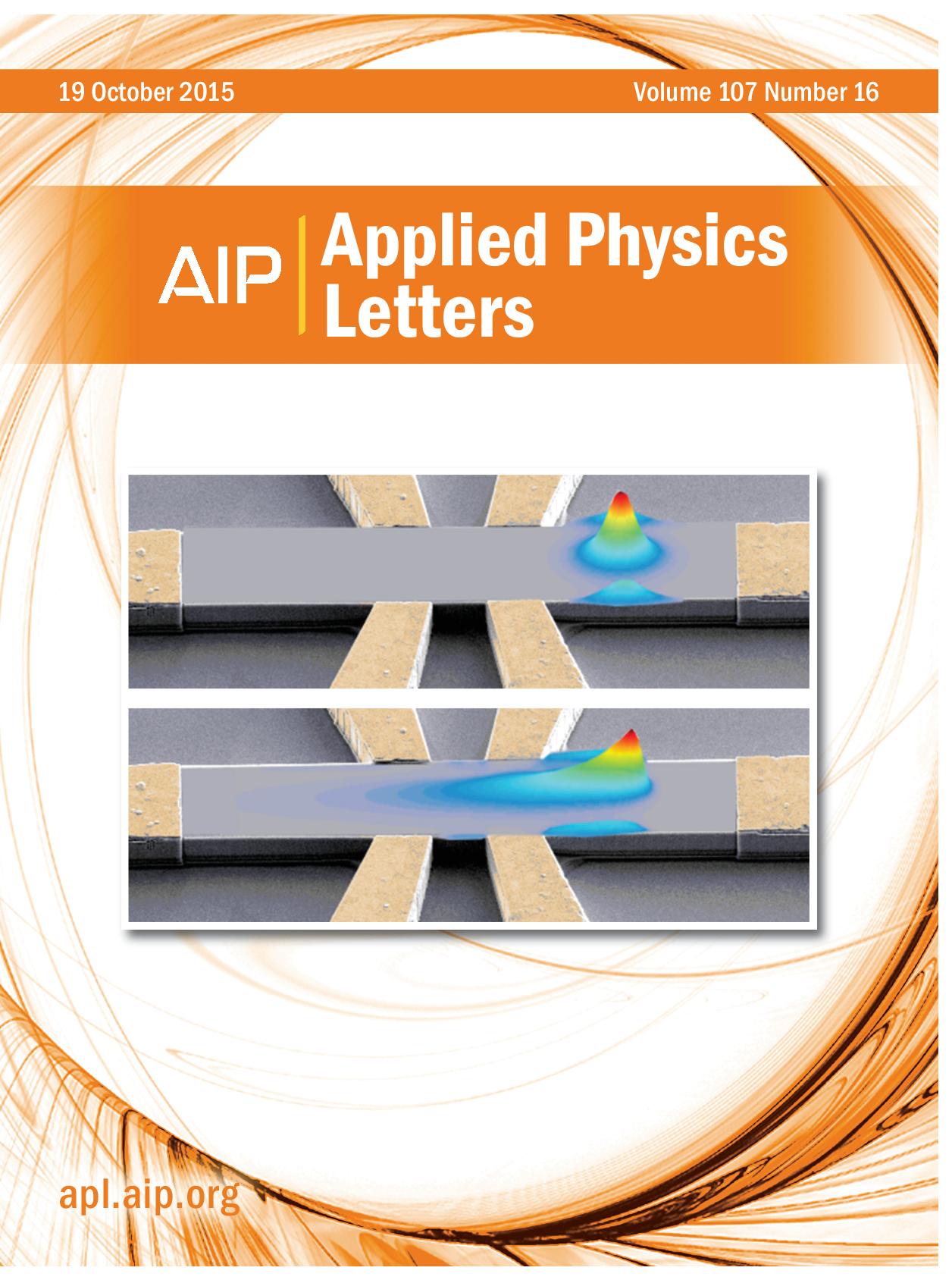
The electric field-induced modifications of the spatial distribution of photoelectrons, photoholes, and electronic spins in optically pumped p + GaAs are investigated using a polarized luminescence imaging microscopy. At low pump intensity, application of an electric field reveals the tail of charge and spin density of drifting electrons. These tails disappear when the pump intensity is increased since a slight differential drift of photoelectrons and photoholes causes the buildup of a strong internal electric field. Spatial separation of photoholes and photoelectrons is very weak so that photoholes drift in the same direction as photoelectrons, thus exhibiting a negative effective mobility. In contrast, for a zero electric field, no significant ambipolar diffusive effects are found in the same sample.
Plus d’information

Page(s) : <

3 mars 2026

Synthétiser des nanomatériaux exotiques à haute température

Si les nanomatériaux font beaucoup parler d’eux, les méthodes pour les fabriquer font encore l’objet de recherches fondamentales, notamment quand de fortes températures sont nécessaires. Au (…)

Lire la suite

19 janvier 2026

Arrivée de Solveig Aamlid, professeure-assistante

Solveig S. Aamlid is a newly appointed Tenure Track Assistant Professor in the Physics Department of Ecole Polytechnique and the Materials for Society (M4S) Interdisciplinary center of Institut (…)

Lire la suite

19 janvier 2026

Nonclassical Nucleation Pathways in Condensation

When vapor nucleates into liquid, the critical droplets break a key assumption of classical nucleation theory (CNT). CNT assumes that critical droplets have the same density as the final liquid—an (…)

Lire la suite

15 janvier 2026

Nouvelle publication : Classical Electrodynamics (Fundamentals and Applications)

Nous sommes heureux d’annoncer la parution du nouveau livre Classical Electrodynamics : Fundamentals and Applications, co-écrit par Fabian Cadiz (Laboratoire PMC, École polytechnique - CNRS) et (…)

Lire la suite

14 octobre 2025

Création du tout premier qubit de l’École Polytechnique

L’équipe QCMX du Laboratoire de Physique de la Matière Condensée (PMC, École Polytechnique / CNRS) a créé le tout premier qubit de l’École Polytechnique : un minuscule circuit supraconducteur où (…)

Lire la suite

Page(s) : <